


How to get crispy baguettes every time?
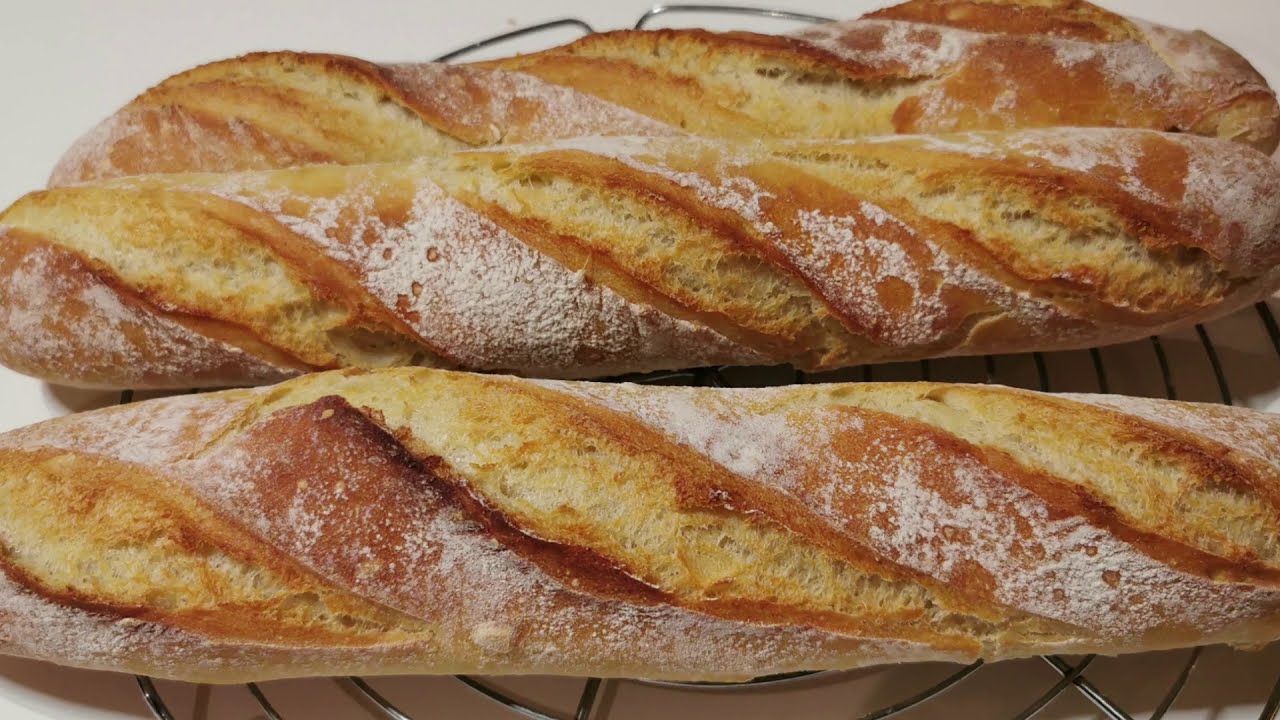

Mastering the art of the crusty baguette is a baker’s dream. This article will reveal the precise techniques and essential tips to make your baguettes successful every time, with a perfectly golden crust and a soft interior. Get ready to discover the secrets of the best artisans to transform your daily bread into a work of culinary art.
Choosing ingredients for perfect baguettes
Flour Selection
The choice of flour is crucial for making quality baguettes. To achieve authentic texture and flavor, it is recommended to use Type 55 or Type 65 flour. These types of flour provide a good balance of gluten and fineness, allowing the dough to develop a sturdy structure while being light enough for an airy crumb.
The Role of Water
Water, although often overlooked, plays a vital role in the quality of the baguette. Using spring or filtered water can improve the flavor of the baguette because it is free of chlorine and other impurities that can interfere with yeast development.
The Importance of Salt
Salt should not only be seen as a simple flavor enhancer. In baguette making, it also strengthens the gluten structure and regulates yeast activity, ensuring proper fermentation. It is best to opt for a fine salt that dissolves quickly and distributes evenly throughout the dough.
Choice of Yeast or Sourdough
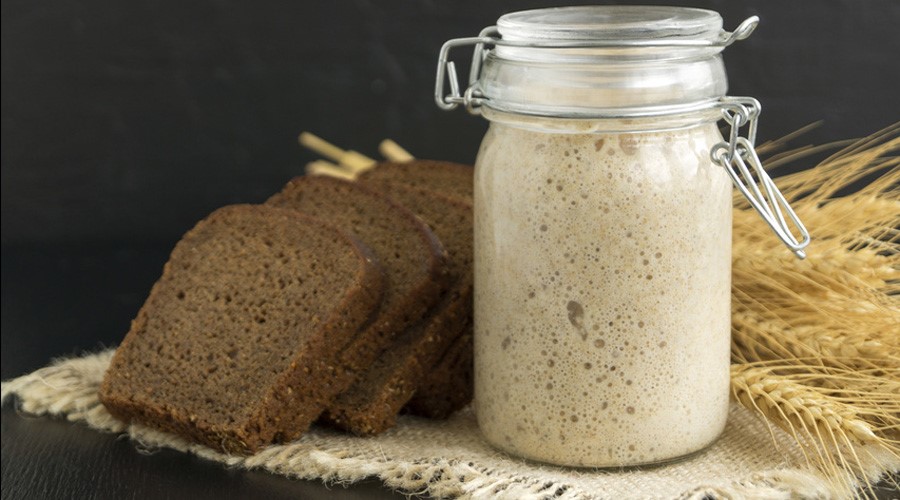
Fresh baker’s yeast or natural sourdough is essential for efficient fermentation. The sourdough will bring more aromatic complexity to the baguettes, while the yeast offers a quicker and more predictable rise. The choice depends on the desired flavor as well as the time available for fermentation.
- Natural sourdough: develops richer aromas and an interesting texture.
- Fresh yeast: guarantees rapid and efficient rising, ideal for a tight schedule.
Baguette Ingredients FAQ
1. What type of flour is best for baguettes?
Type 55 or type 65 flour is generally considered ideal for baguettes, thanks to its optimal gluten level which allows good elasticity of the dough.
2. Can you use tap water to make baguettes?
It is best to use filtered or spring water to avoid impurities and chlorine in tap water, which can affect the taste of the baguette and the activity of the yeast.
3. Yeast or sourdough, what to choose for a traditional baguette?
Sourdough is favored for traditional baguettes thanks to its complex flavor and enhanced texture characteristics. However, for faster preparations, baker’s yeast can be used.
Articles sur le même Sujet


The secrets of fermentation for an impeccable crust
The Fundamentals of Fermentation
The quality of the fermentation is the cornerstone in the manufacturing of crispy baguettes. This biological process is dominated by the production of carbon dioxide, alcohol and organic acid by the yeasts and bacteria present in the leaven. Understanding and controlling fermentation allows you to optimize the texture and flavor of bread.
The first step involves choosing the leaven. A well-cultivated sourdough, rich in active yeasts and lactic acid bacteria, is essential. It not only promotes good dough rising, but also contributes to the formation of a golden crust and aromatic during cooking.
Temperature plays a crucial role in regulating the rate of fermentation. An optimal temperature, generally between 24°C and 28°C, allows ideal fermentation activity, producing regular alveolation and promoting optimal development of the dough’s glutinous network.
Kneading and Hydration Techniques
Kneading is essential to develop the gluten network, which influences the texture and structure of the baguette. Efficient kneading ensures that sufficient air is incorporated into the dough and the ingredients are evenly distributed, which is fundamental for fermentation.
L’hydration of dough also affects the quality of fermentation. A dough with an appropriate hydration rate (around 75%) promotes better fermentation and facilitates the formation of gas bubbles, essential for a crispy crust and an airy crumb.
Mastery of Resting and Rising Times
The resting and rising phases are decisive in the final quality of the baguette. During the first rest, or autolysis, the flour absorbs water, which activates enzymes and improves fermentation. This time also allows the gluten to relax, making it easier to shape the baguettes later.
Managing rising time is also critical. A long first rise allows full development of aromas and flavors. The second rise, or proofing, just after shaping, is crucial to finalize the structure of the dough before baking.
Optimizing Cooking for a Perfect Crust
Cooking is the moment when all the elements of fermentation and preparation converge to form the crispy crust characteristic. The use of a well-preheated oven and the steaming technique (water vapor) are essential to obtain this shiny and crunchy crust.
A high oven temperature (around 240°C) at the start of baking is essential to create an effective “fog”, which prevents the crust from becoming too hard too quickly, allowing the baguette to rise well. Reducing the temperature after the first few minutes will help finish cooking without burning the crust.
FAQs
What is the best type of flour for making crispy baguettes?
T55 or T65 type flour is ideal for baguettes, as it provides good structure while being sufficiently rich in gluten to support effective rising.
How long should the first rise of the dough last?
The first rise should last between 1 and 2 hours, depending on room temperature, until the dough has doubled in volume.
How to create steam in a home oven for crispy baguettes?
Place a drip pan with water at the bottom of the oven or inject steam using a sprayer at the start of cooking to simulate the “fogging” effect.
Articles sur le même Sujet

Effective baguette shaping techniques
The Fundamentals of Baguette Shaping
The shaping of the baguette relies on several crucial steps that determine its texture and crispness. It all starts with the choice of flour, ideally type T55 or T65, which influences the quality of the dough and its ability to develop a beautiful cell during baking.
After the kneading phase, which must be neither too short nor too long to avoid excessive oxidation of the dough, the pointing allows the dough to rest and improve its fermentation characteristics. The duration of this step is decisive: too short, the dough will lack strength; too long, it will become too acidic.
Division and Preshaping Techniques
Once the dough has rested sufficiently, it should be divided into equal pieces. Precision here is essential to ensure consistency of the chopsticks. Preshaping is then carried out by giving the pieces of dough a rough cylinder shape, which facilitates the following steps.
This phase prepares the dough to better absorb the tension of the final shaping. Letting the dough pieces rest covered for 15 to 20 minutes helps relax the gluten and allows for easier shaping afterwards.
Final Shaping and Scoring
The final shaping must be carried out carefully to give the baguette its characteristic shape while preserving the gases produced during fermentation. This step requires precise technique to roll the dough without tearing the surface.
After shaping, the sticks are placed on a linen cloth, called berth, where they will carry out their primer (last fermentation before cooking). It is crucial that this step takes place at a controlled temperature and humidity to optimize rising.
Just before cooking the baguettes, the scoring or nicking is carried out using a sharp blade. This incision not only beautifies the baguette but also directs the expansion of the dough during cooking, which influences the formation of the crust.
Cooking and Key Parameters
Baking the baguettes is probably the step that magnifies all the shaping efforts. An oven preheated to between 240°C and 260°C with good steam injection is essential to obtain a golden and crispy crust. The steam, by creating a thermal shock, also keeps the crust thin and crispy.
Cooking time varies from 20 to 25 minutes depending on the size of the baguettes and the type of oven used. Good control of the internal temperature of the baguette, which must reach around 98°C, guarantees perfect cooking.
FAQ on Baguette Shaping Techniques
1. How important is the choice of flour in shaping the baguette?
Flour plays a crucial role, particularly its type (T55 or T65 recommended), which influences the hydration of the dough and its ability to develop a beautiful honeycomb structure during baking.
2. How does preshaping affect the quality of the baguette?
Pre-shaping allows you to give an initial shape which facilitates final shaping. It also helps relax the gluten, which is essential for uniform expansion of the dough during final fermentation.
3. Why is it important to control temperature and humidity during the final fermentation?
Precise control of the environment during proofing ensures adequate fermentation without drying out or saturating the dough, directly affecting the volume and quality of the final baguette crust.
Articles sur le même Sujet

Baking Tips to Maximize Crispyness
Preparing the Dough: First Step to the Ideal Crust
The basis of a crispy baguette is an impeccably prepared dough. It is advisable to choose high quality flour, often type T55 or T65 suitable for bread making. Hydration of the dough is crucial: a hydration rate of around 75% is ideal to promote the formation of a beautiful alveoli and a golden, crispy crust after baking. Adding a small amount of sourdough or fresh activated yeast triggers the fermentation needed to develop flavor and texture.
Autolyse, the process of simply mixing flour and water before adding yeast and salt, is a beneficial practice. This resting time, generally around 30 minutes, helps in the formation of gluten, a key element in the structure and hold of the baguette.
Kneading and shaping
Kneading can be done manually or using a kneading robot. It should be neither too short nor too long to avoid overheating the dough or making it too elastic. Effective kneading should bring the dough to a stage of gluten development where it becomes smooth and elastic.
After kneading, proofing, first fermentation, is essential. A duration of 1 to 2 hours at room temperature promotes good fermentation. Shaping baguettes is a technique to master to ensure the regularity of the bread. A good degassing, followed by a tight rolling of the dough, forms the baguette before layering and the second fermentation (proofing).
Temperature and humidity management during cooking
There cooking is the final step where the magic happens. An oven preheated to a temperature of 240°C to 250°C is ideal for obtaining a golden and crispy crust. The trick to imitating professional ovens is to generate steam. When putting the baguettes in the oven, throwing a few ice cubes on the oven floor or in a preheated broiler pan helps create a thermal shock that encourages crust development while keeping the crumb airy and light.
Cooking time varies depending on the size of the baguettes, but is generally around 20 to 25 minutes. Monitoring the color of the crust helps ensure that it cooks evenly.
FAQs
What is the best type of flour for making baguettes?
T55 or T65 type flour is ideal because it offers the right balance between firmness and elasticity, essential for a good baguette.
How much yeast to use for the baguette?
For approximately 500g of flour, it is recommended to use 10g of fresh yeast or 3g of active dry yeast.
How long should you bake a baguette?
Baking a baguette generally takes between 20 and 25 minutes at a temperature of 240°C to 250°C.
Articles sur le même Sujet
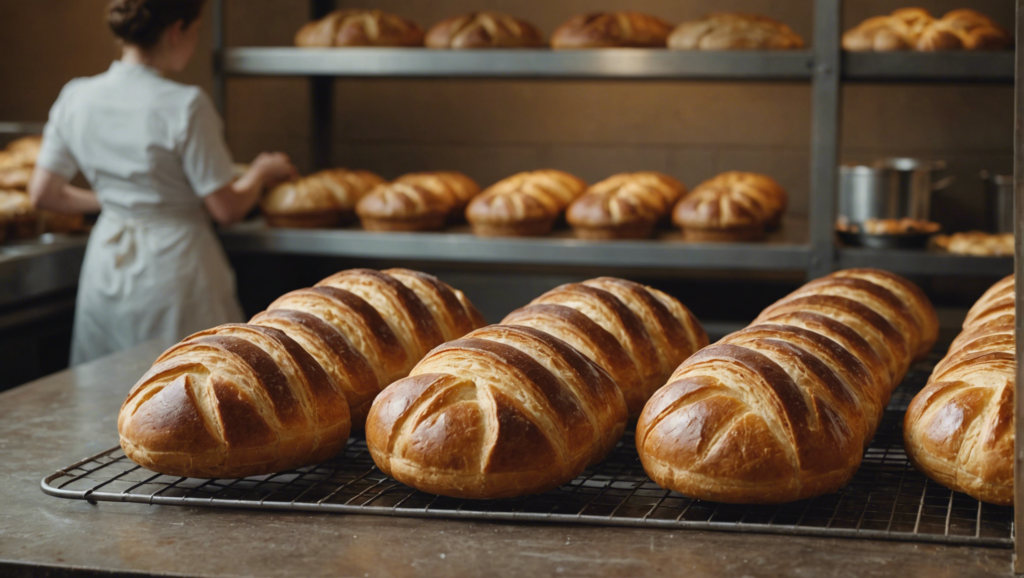
The importance of steam at the right time
The Basics of Steam in Baguette Cooking
To make a crispy baguette, use steam during cooking is crucial. In the presence of steam, the crust of the baguette remains soft longer, which allows the dough to rise further before the crust becomes rigid and stops the process. This leads to a honeycombed crumb and a perfectly crispy crust.
Adding steam is usually done at the beginning of the cooking process. The technique consists of introducing water in the form of steam into a very hot oven. This thermal shock will also help develop a beautiful, shiny golden color on the crust thanks to the gelatinization of the starches on the surface.
Steam Production Techniques for an Ideal Baguette
There are several methods for introducing steam into a domestic or professional oven. A technique commonly used by bakers is the use of a drip pan or steam tray placed in the oven. Just before putting the baguettes in the oven, water is poured onto the hot tray to immediately produce steam. Another method is the use of sprayers to spray water directly into the oven or onto the oven walls.
Using a deck oven with steam injection is a highly efficient professional solution. These ovens allow precise control of the amount of steam, which is crucial for obtaining a baguette with the desired texture.
Timing Optimization for Steam Incorporation
The injection of steam must be carefully synchronized. The optimal time to add it is right at the start of cooking, before the crust begins to form. Introducing steam too early or too late can have counterproductive effects on the texture and appearance of the wand.
As a general rule, steam is needed during the first ten minutes of cooking. After this time, it can be removed from the oven to allow the crust to become crispy and golden. Mastery of these parameters ensures consistent quality of the baguettes produced.
- Steam injection at the start of cooking
- Maintaining steam for the first ten minutes
- Steam release to finish cooking
FAQs
1. Why is steam so important in cooking baguettes?
Steam prevents the crust from becoming tough too quickly, allowing the dough to develop its maximum volume and creating a honeycombed interior texture with a crisp crust.
2. What is the best type of oven for producing steam?
Deck ovens with steam injection are ideal because they allow precise control of the quantity of steam injected, essential for obtaining good quality baguettes.
3. When should you stop adding steam while cooking baguettes?
It is advisable to stop injecting steam after the first ten minutes of cooking to allow the crust to become crispy and reach a nice golden color.
Storage Tips to Keep Your Baguettes Crispy
The crispy baguette, symbol of French gastronomy, requires special attention to maintain its perfect texture after purchase. This is crucial not only to enjoy its authentic taste, but also to enhance your meals with a classic French touch.
Choice of Storage Mode
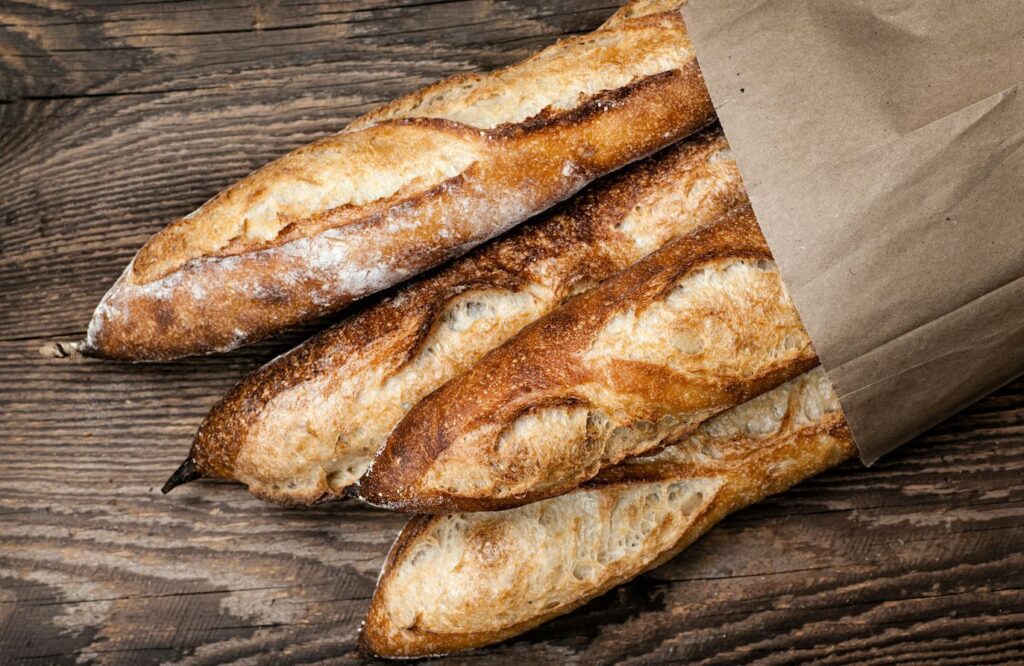
To prolong the freshness of your chopsticks, it is essential to select a suitable conservation method. Avoiding plastic bags, which retain moisture and soften the crust, is a golden rule. Instead, opt for a clean tea towel or cloth bag that allows the baguette to “breathe” while maintaining a satisfactory crust.
Humidity and Temperature Management
Temperature and humidity play a crucial role in the preservation of baguettes. Ideally, bread should be stored at room temperature in a dry place. Temperatures that are too high or too low can affect both the quality of the bread and its shelf life. Using a canned loaf, often made of wood, helps balance these two factors and preserves the crispness of the crust for longer.
Reheating the Baguette
To restore your baguette to its original crispy texture, a short time in the oven is recommended. Preheat your oven to 180°C (356°F) and bake the baguette for around 5 to 10 minutes. This method is particularly effective for slightly older breads.
Immediate Use After Purchase
If possible, consume your baguette shortly after purchase to benefit from all its freshness. A fresh baguette is at its peak of crispness and flavor right after it comes out of the oven.
A simple list of steps to follow might break down as follows:
- Avoid plastic packaging
- Storage at room temperature in a dry place
- Reheat in the oven before serving if necessary
- Consume as soon as possible after purchase for an optimal experience
FAQs
How to store a baguette so that it stays crispy for longer?
Store the wand in a cloth bag or clean tea towel at room temperature, away from moisture.
Can you freeze a baguette to preserve its freshness?
Yes, you can freeze the baguette. Make sure to wrap it tightly with foil or plastic wrap to avoid freezer burn. To eat it, reheat it directly in the oven without prior defrosting.
What is the best method to reheat a baguette?
Preheat your oven to 180°C (356°F) and place the baguette directly on the oven rack for about 5 to 10 minutes, until it regains its original crispness.