What equipment should I use for a banneton bakery?

In this article, we delve deep into the art of artisan baking to explore the various materials used in making bannetons, an essential tool for any homemade bread enthusiast. We’ll discuss the pros and cons of different types of bannetons, whether wicker, plastic or fabric, to help you choose the one that will best suit your needs and improve the quality of your breads. Help us become an expert in choosing the equipment essential to the success of your artisanal breads.
Choosing the material for your banneton
Discover the best material for banneton is essential for any lover of bakery, and more specifically for those who dedicate themselves to the preparation of homemade bread. A banneton, also called a proofing layer, plays a crucial role in shaping and rising the dough before baking. The most commonly used materials for bannetons are wicker and plastic, each with distinct advantages and disadvantages.
Wicker bannetons: tradition and aesthetics
Wicker is the material traditional for bannetons due to its natural properties which promote excellent air circulation around the dough. This material not only keeps the dough cool but also absorbs excess moisture, which is crucial for the formation of a crispy crust after baking. Using a wicker banneton can also print pretty patterns on the dough, which adds a rustic, artisanal touch to your homemade bread.
Plastic bannetons: hygiene and consistency
Conversely, plastic is valued for its ease of cleaning and durability. Plastic bannetons, often chosen by modern bakery professionals, do not require extensive preparation before use and are resistant to mold. Although they don’t promote the same air circulation as wicker, they are perfect for those looking for a more hygienic, lower maintenance option. Additionally, they produce a very regular shape and are ideal for mass production of the homemade bread.
Take into account the maintenance factor
Choosing between a wicker banneton and a plastic banneton may also depend on how much time you are willing to spend on maintenance. Wicker bannetons require gentle cleaning, often just dry brushing and exposure to sunlight to prevent mold from forming. Plastic bannetons can be easily washed with hot water and soap, which can be a significant time saver for some users.
Bannetons FAQs
How long does a wicker banneton last compared to a plastic banneton?
A wicker banneton can last for many years if properly maintained, while a plastic banneton generally has a longer lifespan due to its resistance to moisture and mold.
Can we use a plastic banneton for all types of dough?
Yes, plastic bannetons are suitable for a variety of doughs, although they do not offer the same air permeability as wicker bannetons.
Does banneton material affect the taste of bread?
No, banneton material does not directly affect the taste of the bread, but it can influence the texture of the crust depending on moisture management during fermentation.
Articles sur le même Sujet


Criteria for selecting a suitable banneton
Importance of Materials and Their Influence on Cooking
When selecting a banneton bread, the material constituting the accessory is of capital importance. The most commonly used are wicker and plastic. Wicker, material traditional and natural, is prized for its ability to absorb moisture, allowing the dough to remain dry and obtain a crispy crust. On the other hand, more modern plastic bannetons are known for their durability and ease of cleaning. Depending on your approach bakery, it is essential to choose the material that best complements your methods and aspirations.
Dimensions and Shape: Key Factors for Shaping
The size and shape of the banneton must match the type of homemade bread that you want to produce. Bannetons come in various shapes – round, oval, and even long – to suit all styles of bread. Size plays a crucial role as it should match the weight of dough you plan to use. A banneton that is too large or too small could negatively impact the shape and final volume of the bread.
Selection Based on Perforation and Internal Texture
The internal texture and perforation of the banneton have a direct impact on the quality of the bread. Good aeration thanks to adequate perforations allows optimal fermentation and growth of the dough. Additionally, some internal textures can help create an interesting and aesthetically pleasing bread surface. Therefore choose a banneton offering good interaction between the dough and the surface for a result home made quality professional.
Practical Considerations for Maintenance and Durability
Maintaining banneton is essential to guarantee not only the longevity of the product but also the health of your homemade bread. Materials like wicker often require manual cleaning and proper drying to prevent mold and mildew. In contrast, plastic bannetons can often be cleaned more easily and are generally more resistant to adverse conditions. Your choice could therefore also be influenced by the time and effort you are willing to devote to maintaining your bakery equipment.
FAQ on choosing a suitable banneton
- Which banneton material is best for starting out in baking?
For beginners, a wicker banneton is often recommended because of its ability to hold flour and give a nice texture to the bread. - How to determine the size of banneton needed?
Calculate the volume of dough expected for your usual type of bread and choose a banneton that can hold this quantity (1 kg of dough often requires a banneton of around 25-30 cm in diameter). - Is it possible to use a banneton for all types of bread?
Yes, but it can be beneficial to have different bannetons for different types of bread, especially if you experiment with varying shapes and sizes.
Articles sur le même Sujet


Maintenance and cleaning of bannetons
Importance of Regular Cleaning of Bannetons
THE bannetons are essential tools in the art of bakery, particularly for fans of homemade bread. These baskets, often made of wicker or plastic, are used to maintain the shape of the bread during the final rising phase. Proper cleaning is crucial not only to preserve the hygienic quality of the banneton but also to ensure a long life of this accessory professional.
The presence of flour residue and humidity can lead to the development of mold, affecting the quality of future breads. Additionally, debris can interfere with the texture and design of the bread, disturbing the appearance traditional and craftsmanship desired.
Cleaning Techniques for Wicker Bannetons
Cleaning a wicker banneton requires special attention so as not to damage the natural fibers. After each use, it is recommended to remove excess flour using a soft brush. Avoid the use of water because humidity can deteriorate the wicker and encourage the formation of mold.
If deeper cleaning is necessary, especially if there are stains or after heavy use, a mixture of baking soda and water can be used. Apply the mixture to a clean cloth and gently rub the affected areas. Then let the banneton dry in a well-ventilated area, away from direct sunlight.
Cleaning Methods for Plastic Bannetons
Plastic bannetons offer superior ease of cleaning compared to wicker ones. They can be washed with lukewarm water and mild detergent after each use. It is important to ensure the banneton is completely dry before storing to avoid any buildup of bacteria or mold.
For occasional, more thorough cleanings or to eliminate odors, a diluted white vinegar solution can be used. Immerse the banneton in the solution for a few minutes, then rinse thoroughly with clean water and allow to dry completely.
Precautions and Tips for Maintaining Bannetons
To extend the life of your bannetons, a few precautions must be taken. Never use a microwave oven, conventional oven, or dishwasher for bannetons, whatever the material. These methods can alter the shape and structural integrity of the banneton.
When storing, ensure bannetons are stored in a dry, well-ventilated area to prevent any residual moisture. It’s also a good idea to avoid stacking them when damp to maintain good air circulation and prevent mold growth.
FAQs
- How do I know when to clean my banneton?
It is recommended to clean your banneton after each use to remove flour residue. More thorough cleaning can be done after several uses or when you notice stains or odors. - Can we use disinfectant sprays on bannetons?
It is not recommended to use chemical disinfectant sprays, especially on wicker bannetons, as they can damage natural materials. Choose the gentle cleaning methods mentioned above. - Is it possible to restore a banneton damaged by mold?
If the mold is mild, you can try cleaning the banneton with baking soda and water. However, if mold has penetrated deep into the wicker, it is often best to replace the banneton to ensure food safety.
Articles sur le même Sujet
Additional accessories for using a banneton
The Essential Functions of the Banneton
THE banneton bread is an accessory bakery fundamental for anyone wishing to perfect the art of homemade bread. This part, often made of wicker or plastic, is essential to support the dough during its final rise and give it an airy and uniform structure. Using a banneton not only contributes to the aesthetic shape of the bread, but also to the improvement of its texture and crust.
Choice of Banneton Material
Wicker is the traditional material for bannetons. It is appreciated for its ability to absorb moisture from the surface of the dough, thus promoting a crispy crust. In addition, the natural spirals of the wicker print aesthetic patterns on the bread. However, for those looking for increased ease of cleaning and durability, plastic bannetons are a modern alternative. They provide a non-stick surface that can be easily washed and reused.
Additional Accessories for Using the Banneton
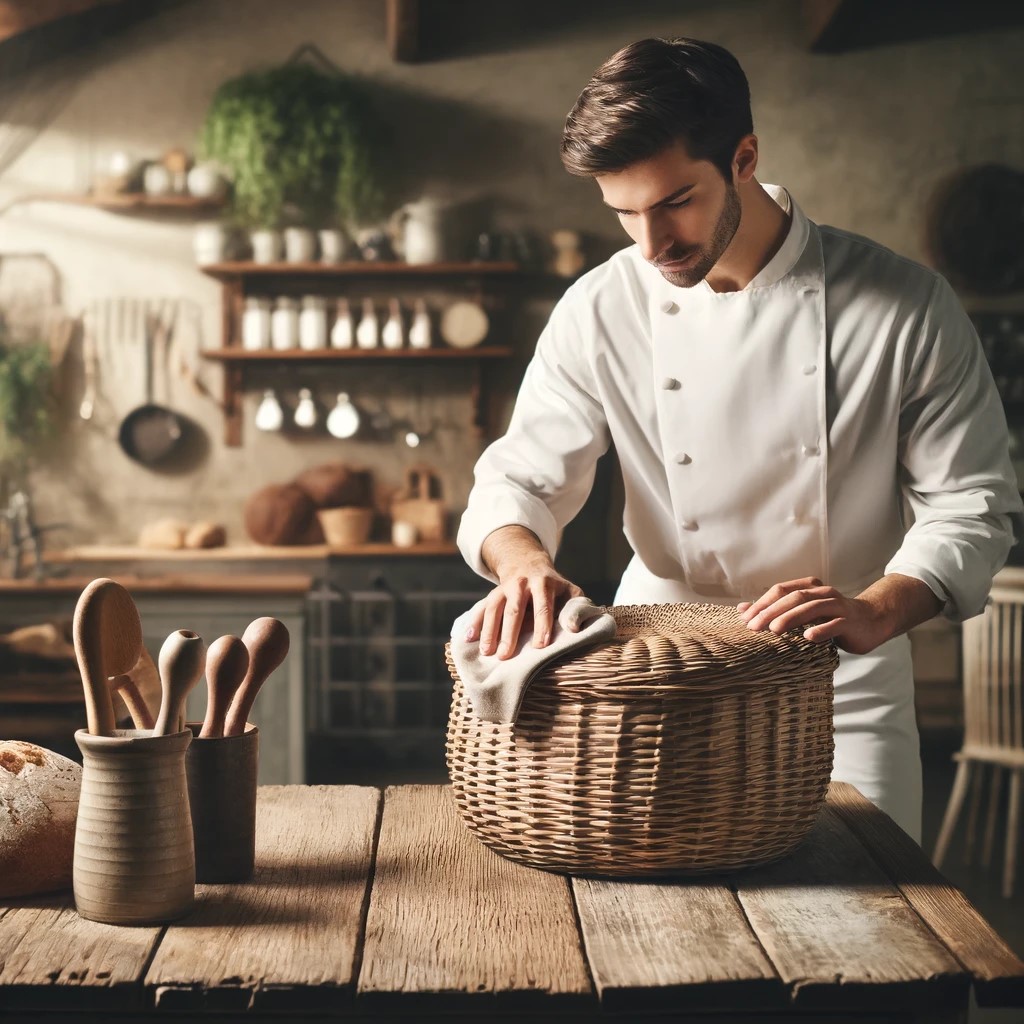
In addition to the banneton, several other accessories are important to optimize the use of this tool. An essential tool is the baker’s horn, used to cut and manipulate dough with precision. Another essential accessory is the covering cloth, usually made of linen, which prevents the dough from sticking and retains the necessary humidity. For fans of home made, the use of a baker’s blade, or grignette, to score the dough before baking, makes it possible to control the expansion of the dough during cooking.
- Baker’s horn: to handle the dough delicately.
- Linen cloth: to cover the dough and maintain humidity.
- Baker’s blade (grignette): to make precise incisions.
Banneton maintenance
Proper maintenance of banneton is vital to ensure its longevity and functionality. After each use, it is recommended to remove flour residue using a soft brush and let it air dry. Avoid frequent washing with water, which could damage the natural fibers of the wicker and reduce its ability to absorb moisture. Plastic bannetons can be washed more regularly without compromising their integrity.
FAQs
- Can we use the same banneton for different types of dough?
- Yes, a banneton can be used for a variety of recipes, but it is essential to flour it well between each use to prevent the dough from sticking to it.
- How to choose the banneton size?
- The size of the banneton should correspond to the amount of dough used. There are size guides based on expected dough weight.
- Is it necessary to use a cloth to cover the dough in a banneton?
- Yes, the cloth maintains the humidity of the dough and prevents its surface from drying out, while making it easier to remove from the mold without sticking.